

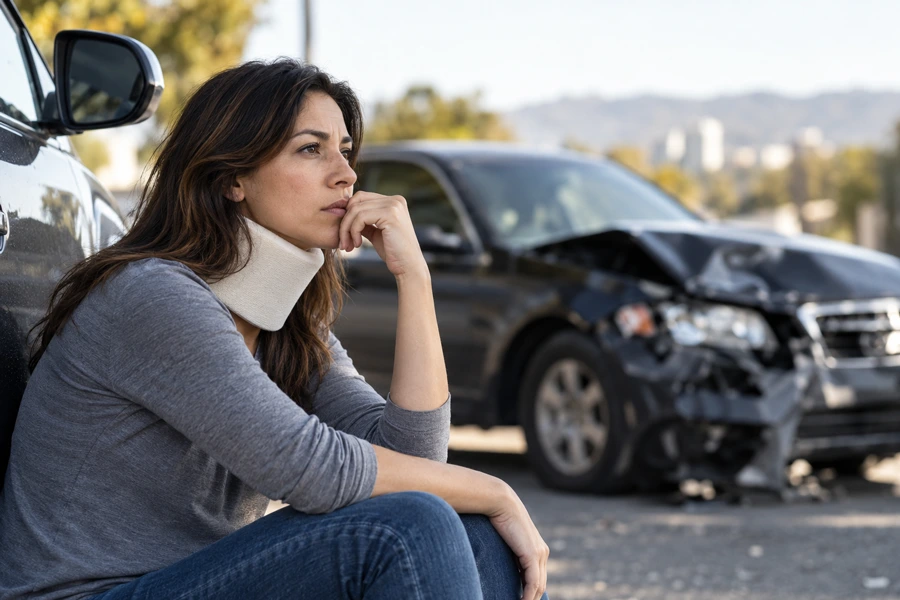
The first question almost everyone asks after an accident is some version of: what is this worth? It is a fair question, and the honest answer is that it depends on facts that are still developing — but the framework is not mysterious, and you are entitled to understand it.
The two halves of every injury claim
California divides damages into economic and non-economic.
Economic damages are the ones with receipts. Medical bills already incurred. The cost of future treatment, surgery, therapy, or in-home care. Wages you lost while you could not work. Diminished earning capacity if you cannot return to the work you did before. Property damage. These are proven with records, bills, and expert testimony.
Non-economic damages cover what the injury took from your life. Physical pain. Emotional distress. Loss of enjoyment of activities you used to do. Disfigurement. Loss of consortium for a spouse. There is no formula in California law for calculating these — no multiplier the courts require — and any lawyer who quotes you a precise number in a first phone call is guessing.
What actually drives value: the severity and permanence of the injury, the clarity of liability, the quality of medical documentation, the credibility of the injured person, the available insurance limits, and the venue where the case would be tried.
Comparative fault does not end your case
California is a pure comparative fault state. If you are found partly responsible for the accident, your recovery is reduced by your percentage of fault — but it is not eliminated. Someone found 60% at fault can still recover 40% of their damages.
This matters because insurers lean on it hard. Expect to hear that you were speeding, that you stepped off the curb early, that you should have seen the spill. Those arguments are negotiating positions, not verdicts.
The deadlines
- Two years from the date of injury for most personal injury claims (CCP § 335.1).
- Six months to present a written claim if a government entity is involved — a city bus, a county road, a public hospital, a school district. Miss this and the case is generally over, regardless of how strong it was.
- Two years for wrongful death, running from the date of death.
- Shorter contractual deadlines may apply to uninsured and underinsured motorist claims against your own carrier. Check your policy.
Minors generally have their limitations period tolled until they turn 18, but the government claim rules are far less forgiving. Do not assume.
Situations with rules of their own
Dog bites. California imposes strict liability on dog owners under Civil Code § 3342. You do not need to prove the dog had bitten before, and the “one free bite” rule does not exist here. The owner is liable if you were lawfully on the property or in a public place.
Uber and Lyft accidents. Rideshare companies carry substantial commercial liability coverage — commonly $1 million — but it applies only during certain phases of a trip. Whether the app was on, whether a ride was accepted, and whether a passenger was in the car all change which policy responds. These cases are worth investigating carefully; the coverage is often far larger than a personal auto policy.
Slip and fall. Premises liability requires proof that the property owner knew or should have known about the dangerous condition and failed to fix or warn about it. Evidence disappears fast — spills get mopped, surveillance footage gets overwritten on a 30-day loop. A preservation letter sent early can be decisive.
Traumatic brain injury. TBIs are frequently missed in the emergency room, where attention goes to visible trauma. If you have had headaches, memory trouble, light sensitivity, mood changes, or difficulty concentrating since the accident, tell a doctor and get it in the record. Undocumented symptoms are, for settlement purposes, symptoms that did not happen.
Uninsured drivers. Under Proposition 213 (Civil Code § 3333.4), an injured driver who was operating without insurance generally cannot recover non-economic damages, even when the crash was entirely someone else’s fault. Economic damages remain recoverable. There are exceptions, including where the other driver was convicted of DUI.
The mistakes that quietly cost money
- Gaps in treatment. A three-week break between appointments becomes “she must have recovered” in a settlement letter. If you are still hurting, keep going, and tell your provider what still hurts.
- Recorded statements to the other driver’s insurer. You are not obligated to give one. Adjusters are trained to elicit language that limits your claim, often in the first 48 hours when you don’t yet know the full extent of your injuries.
- Social media. A photo of you at a birthday party will be offered as proof you are fine. Defense investigators look. Assume everything is discoverable.
- Saying “I’m fine” at the scene. Adrenaline masks injury. Soft tissue damage and concussions often present a day or two later. That statement will appear in the police report.
- Accepting the first offer. Early offers arrive before the full medical picture exists. Once you sign the release, the claim is closed permanently — including for treatment you have not yet discovered you need.
What happens to your medical bills in the meantime
This worries people more than anything else, and there are usually options. Health insurance can be billed with a lien asserted against the eventual recovery. Med-pay coverage under your auto policy may cover initial treatment regardless of fault. Some providers will treat on a lien, deferring payment until the case resolves. Part of what a lawyer does is negotiate those liens down at the end, which directly increases what you take home.
Talk to us before you talk to their adjuster
We handle car and truck accidents, motorcycle and pedestrian accidents, construction accidents, catastrophic injuries, traumatic brain injury, dog bites, slip and fall, rideshare collisions, and wrongful death. Consultations are free, and we handle these matters on a contingency basis — no fee unless we recover for you.
Kamarian Law, Inc.
210 N Glenoaks Blvd, Suite D, Burbank, CA 91502
818.859.7090 · info@kamarianlaw.com
Learn more about our personal injury practice · Schedule a consultation
This article is provided for general informational purposes only and does not constitute legal advice. Reading it does not create an attorney-client relationship with Kamarian Law, Inc. Laws change and every case turns on its own facts. Prior results do not guarantee a similar outcome. Consult a licensed attorney about your specific situation.